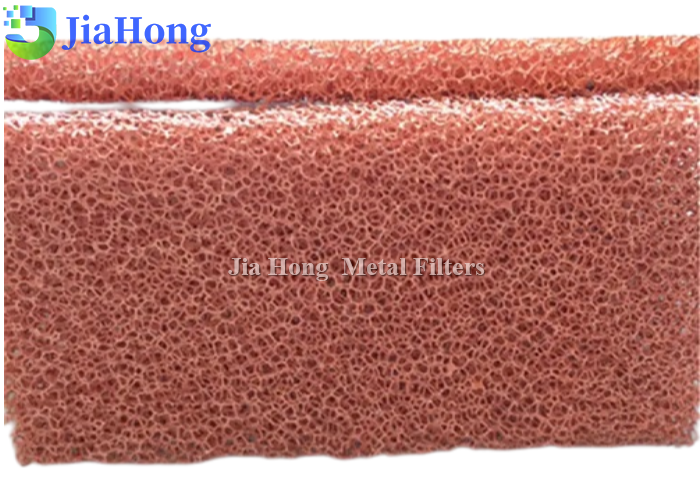
10 20 30 100 110PPI 3D Porous Metal Foam
High-Porosity Sintered Metal Foam: The Future of Thermal & Fluid Management
Our Sintered Metal Foam is a three-dimensional, open-cell structure composed of interconnected metal ligaments. Imagine a "metallic sponge" with a skeletal frame that offers an extraordinary surface-area-to-volume ratio. Typically manufactured from Nickel, Copper, or Aluminum, this material provides the structural rigidity of metal with the permeability of a gas, making it indispensable for high-performance cooling and electrochemical applications.
Technical Specifications & Parameters
Unlike filters rated by microns, metal foam is primarily categorized by PPI (Pores Per Inch) and Relative Density.
1. Physical Property Table
Property | Typical Range / Value |
Material Options | Nickel (Ni), Copper (Cu), Iron-Nickel (Fe-Ni), Aluminum (Al), Alloy Metal and ect. |
Pore Density (PPI) | 5 PPI – 120 PPI (Pores Per Inch) |
Porosity Range | 75% – 98% (Ultra-high permeability) |
Standard Thickness | 1.0 mm – 30 mm (Customizable) |
Specific Surface Area | 500m2 – 2500m2 |
Purity | ≥99.8% (High-purity grades available) |
2. Material-Specific Applications
-Nickel Foam: The "gold standard" for battery electrodes (Ni-MH, Ni-Cd) and Hydrogen production (Electrolyzer electrodes). It features excellent electrical conductivity and corrosion resistance.
-Copper Foam: Known for the highest thermal conductivity. It is the premier choice for CPU Heat Sinks, LED cooling, and heat exchangers.
-Aluminum Foam: Ultralight and energy-absorbent. Used in aerospace for "sandwich" panels and sound-deadening barriers.
-Alloy Metal Foam: such as Ni-Fe Foam, Ni-Mo Foam, and ect...
3. Key Features & Unique Benefits of Metal foam
-Maximum Surface Area :The tortuous, interconnected path provides a massive surface area for chemical reactions or heat transfer within a very small footprint.
-Exceptional Heat & Mass Transfer: Because the fluid (gas or liquid) must navigate the metallic ligaments, it creates micro-turbulence, which significantly breaks down the thermal boundary layer, enhancing Heat Exchange Efficiency by up to 3–5x compared to solid fins.
-Sound & Vibration Absorption:The open-cell geometry effectively traps sound waves, converting acoustic energy into low-grade heat, making it an excellent high-temperature Acoustic Muffler.
-Lightweight Strength:With a porosity of up to 98%, these foams are incredibly light yet maintain metallic properties like weldability, conductivity, and fire resistance.
4. Primary Industrial Applications of the sintered metal foam
-Green Energy: Electrodes for Hydrogen Water Electrolyzers (AEM/PEM), Fuel Cells, and Supercapacitors.
-Thermal Management: Heat pipes, phase change material (PCM) carriers, and liquid cooling cold plates.
-Catalysis: Substrate for precious metal catalysts in VOC treatment and chemical reactors.
-Aviation & Defense: EMI (Electromagnetic Interference) shielding and energy-absorbing blast protection.
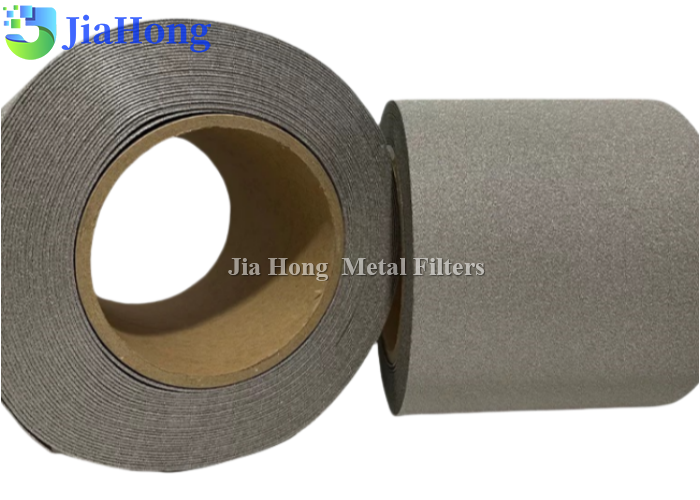
5. Comparison: Powder vs. Mesh vs. Foam
Feature | Sintered Powder | Sintered Mesh | Sintered Foam |
Primary Use | High-precision filtration | Surface filtration / Aeration | Heat transfer / Energy storage |
Porosity | 30% – 50% | 35% – 60% | 75% – 98% |
Structure | Tortuous / Dense | Geometric / Layered | Ligament / Skeletal |
Flow Rate | Low to Medium | Medium to High | Ultra-High |
6. FAQ – Metal Foam
Q: Is the foam "Open-Cell" or "Closed-Cell"?
A: We specialize in Open-Cell foam, meaning all pores are interconnected. This allows fluids to pass through the material freely for filtration or cooling.
Q: Can Sintered Metal Foam be compressed?
A: Yes. We can "cold-press" the foam to specific densities to meet your exact pressure drop or thermal conductivity requirements.
Q: How do you join metal foam to other parts?
A: It can be joined via Vacuum Brazing, Epoxy Bonding, or specialized TIG welding. For heat sinks, brazing is recommended to ensure zero thermal resistance at the interface.