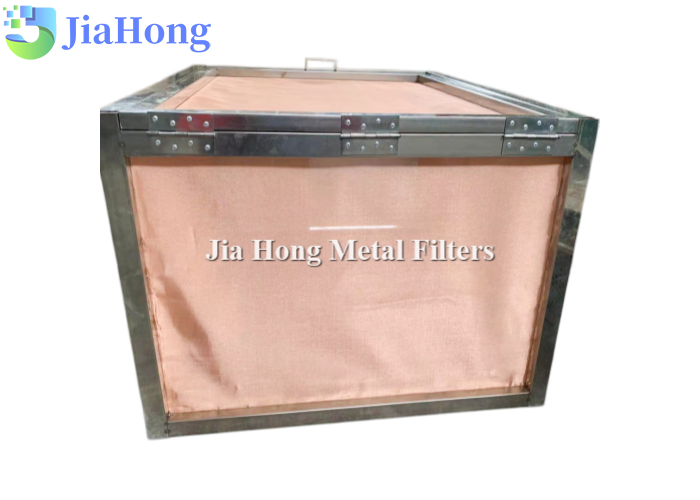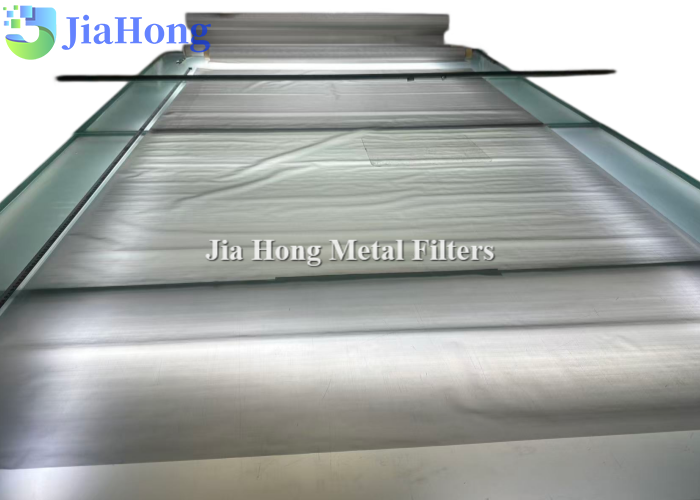
46×46 Mesh 0.19mm 0.25mm Wire Raney Nickel Coated Pure Nickel Woven Mesh Catalyst, a structured catalyst support / Raney‑nickel catalytic mesh, typically used in hydrogenation reactor internals or active electrodes for water electrolysis.
| Wire Diameter (mm) | Theoretical Opening (mm) | Theoretical Opening (µm) | Open Area (%) | Approx. Areal Weight | Substrate Characteristics |
|---|---|---|---|---|---|
| 0.19(Plain Weave) | 0.362 | 362 | ~43.2 | lighter (~0.8–1.0 kg/m²) | Good flexibility, excellent coating adhesion, but prone to distortion during high‑temperature sintering |
| 0.25 | 0.302 | 302 | ~30.1 | heavier (~1.4–1.6 kg/m²) | Higher rigidity, better thermal‑shock resistance, preferred for high‑pressure hydrogenation |
Raney Nickel Coating is a porous skeleton‑nickel loading process.
A slurry made from Ni‑Al alloy powder (40–50% Al) mixed with organic binders is applied onto the nickel mesh, followed by high‑temperature vacuum sintering (~1100 °C) and finally leaching of aluminium in concentrated alkali (KOH/NaOH) to create a sponge‑like porous nickel layer (Raney nickel).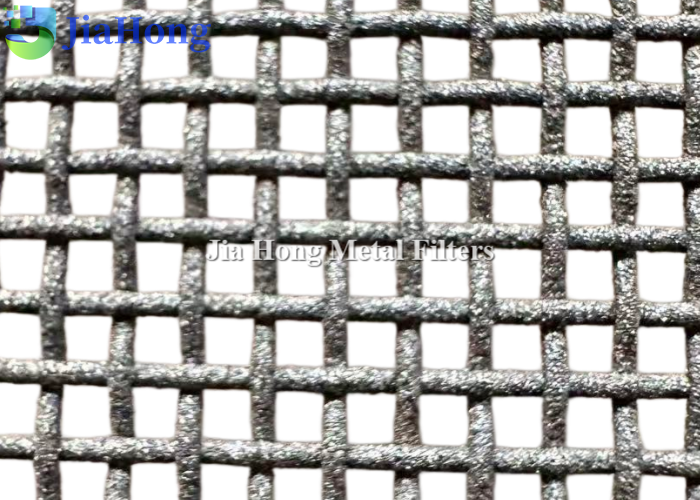
Application Scenarios (which determine the weaving method)
Scenario A: Fixed‑bed hydrogenation reactors (chemical industry) – the catalytic mesh is cut into structured packing (e.g., 45° corrugated sheets) and loaded into towers. This requires absolute flatness of the mesh surface and burr‑free edges (welded or fixed), otherwise catalyst fines will block downstream equipment.
Scenario B: Alkaline water electrolysis (AWE) cathodes/anodes – the Raney nickel coating serves as a catalyst for hydrogen evolution (HER) or oxygen evolution (OER). Here, the focus is on overpotential (electrochemical performance); the mesh is usually cut into round or square electrode sheets.