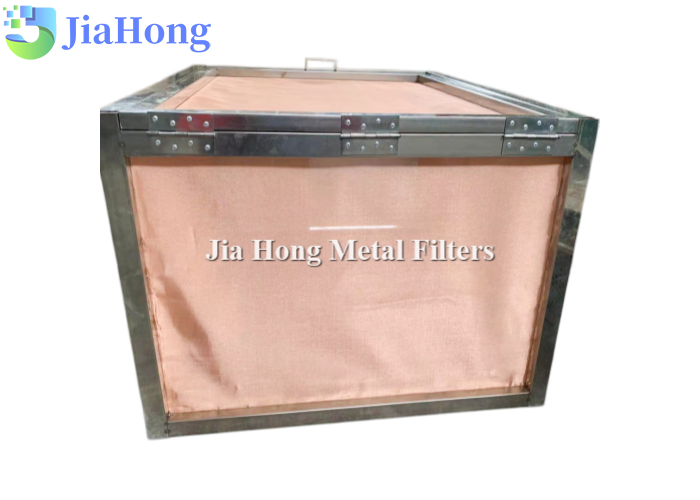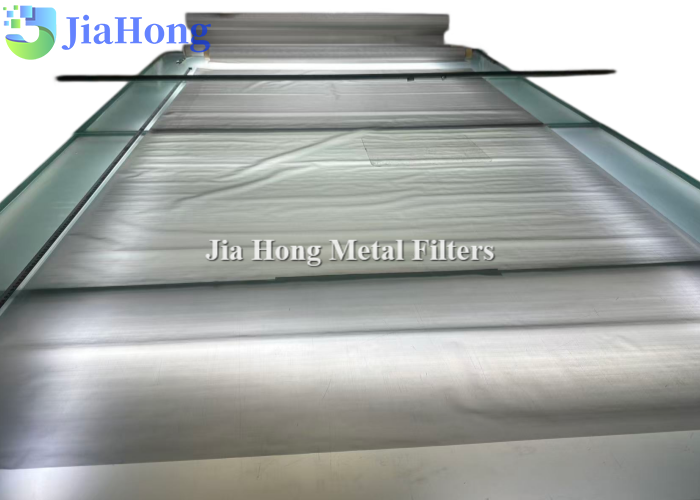
Material Properties: UNS N02200 (Ni 200)
- Ultra-High Purity (Ni ≥ 99.2%): Delivers exceptional electrical conductivity, significantly reducing resistive power loss during current collection.
- Alkali Corrosion Resistance: Superior resistance to caustic embrittlement in high-temperature (60°C–90°C), high-concentration (20%–30% KOH) environments, ensuring tens of thousands of hours of stable operation.
- Oxidation Resistance: Maintains structural integrity even under the harsh oxidative potentials of the Oxygen Evolution Reaction (OER) at the anode.
Specifications & Physical Functions: 46 Mesh / 0.25mm Wire Diameter
- Mechanical Support (0.25mm Wire): High mechanical strength capable of withstanding the axial clamping pressure in zero-gap cell designs without irreversible deformation.
- Optimized Pore Size & Open Area: The twill weaving 46-mesh structure (~0.30mm aperture) balances contact area with fluid permeability, promoting rapid KOH electrolyte flow.
- Bubble Detachment: The micro-mesh structure disrupts bubble adhesion during Hydrogen Evolution (HER) and Oxygen Evolution (OER), accelerating gas-liquid separation and reducing overpotential caused by bubble shielding.
Key Roles in Zero-gap Electrolyzer Configurations
- Ohmic Loss (IR Drop) Reduction: Serves as a mesh electrode or current collector pressed directly against porous diaphragms (e.g., PPS composite membranes), eliminating the electrolyte gap to lower cell voltage.
- Ideal Catalyst Substrate: Functions as a robust base for surface activation treatments—such as Raney Nickel coating or Ni-Fe deposition—to boost active surface area and electrocatalytic activity.
- Uniform Flow and Current Distribution: Ensures homogeneous pressure across the cell frame, preventing local hot spots and mass transport polarization.
Assembly & Selection Guidelines
- Flatness & Burr-Free Surface: Tiny metal burrs can puncture thin diaphragms under mechanical compression, risking gas crossover. Flat/calendered mesh is strongly recommended.
- Ultrasonic Cleaning: Thoroughly degrease the mesh prior to assembly to remove residual drawing lubricants, preventing membrane contamination or loss of catalytic performance.